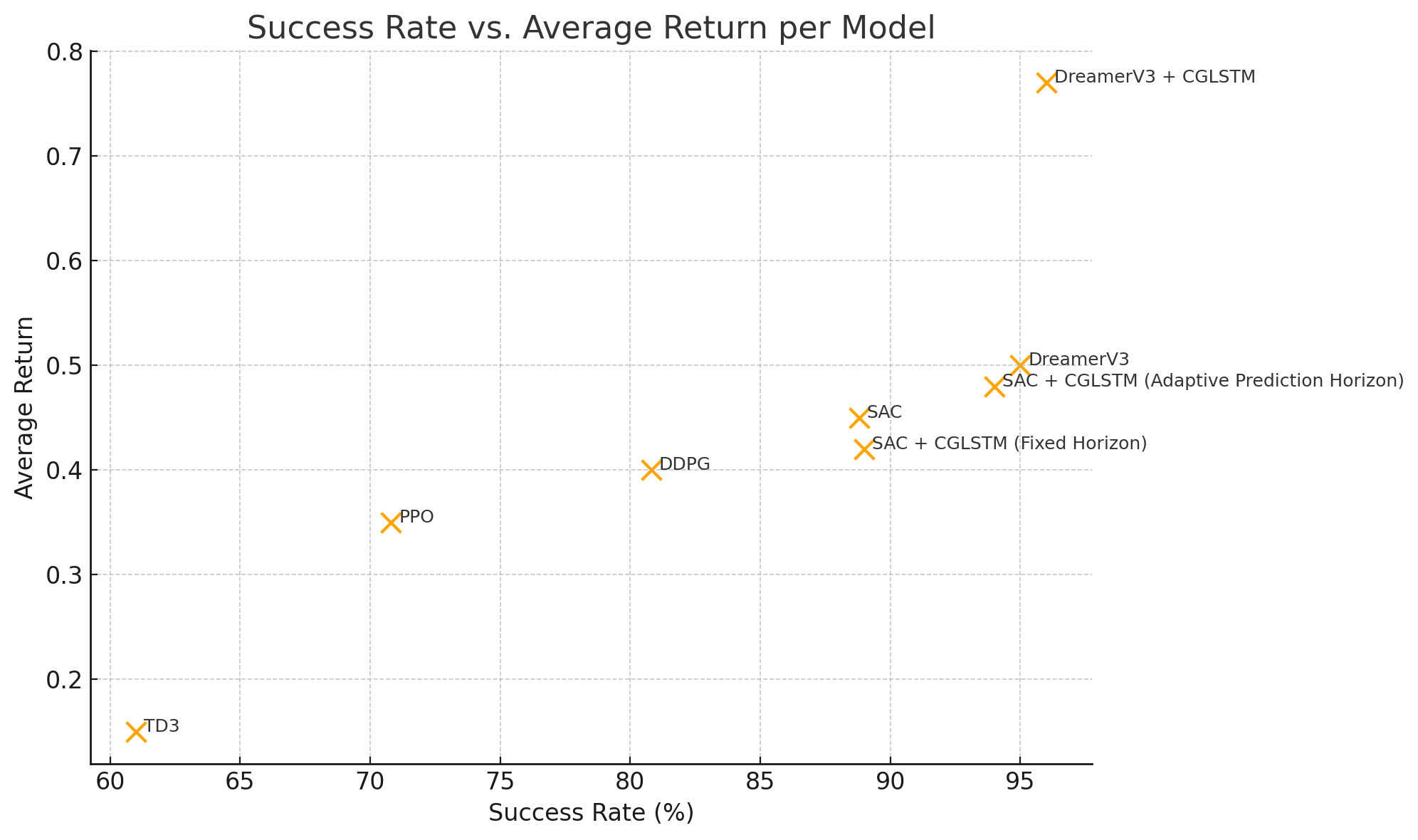
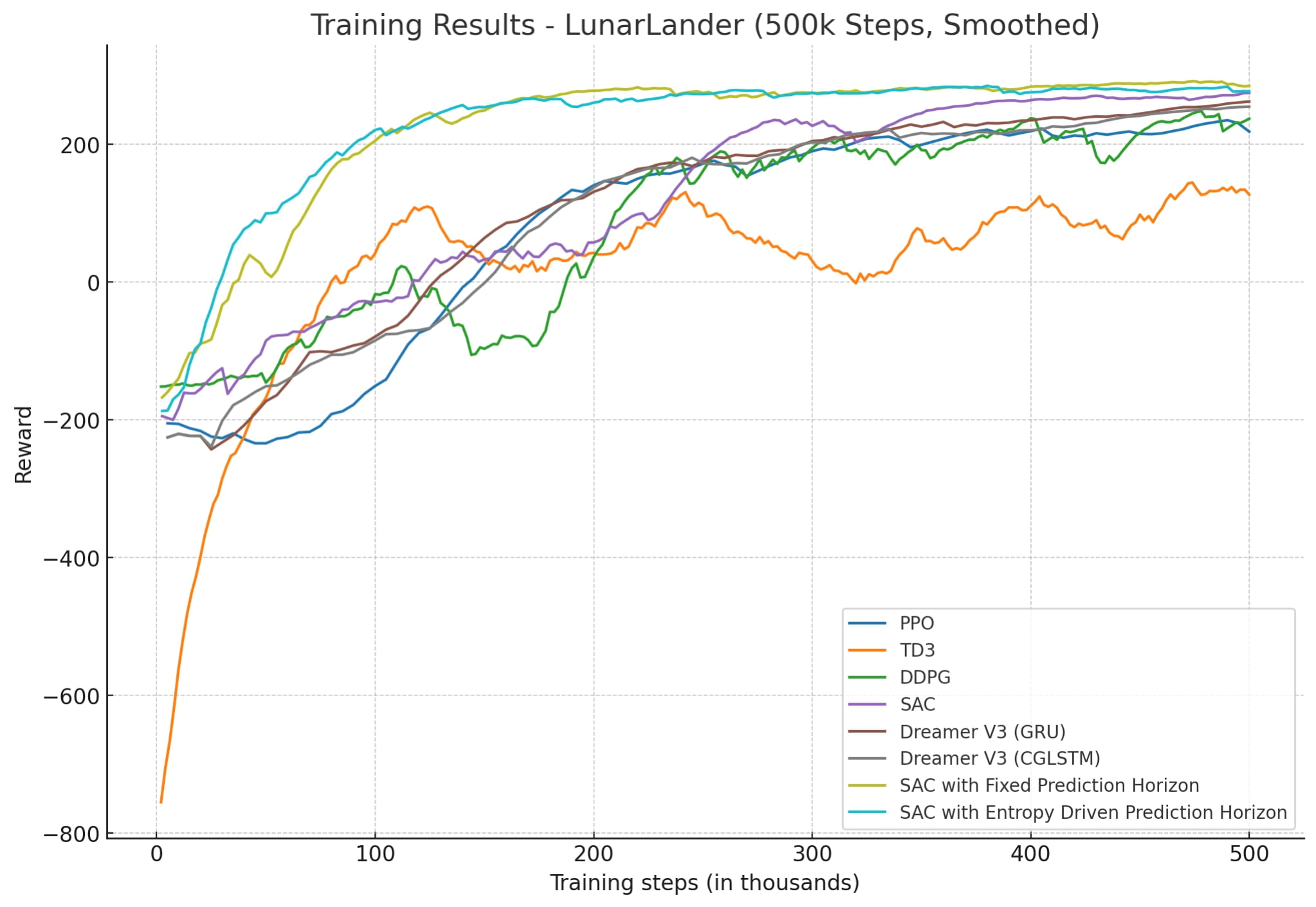
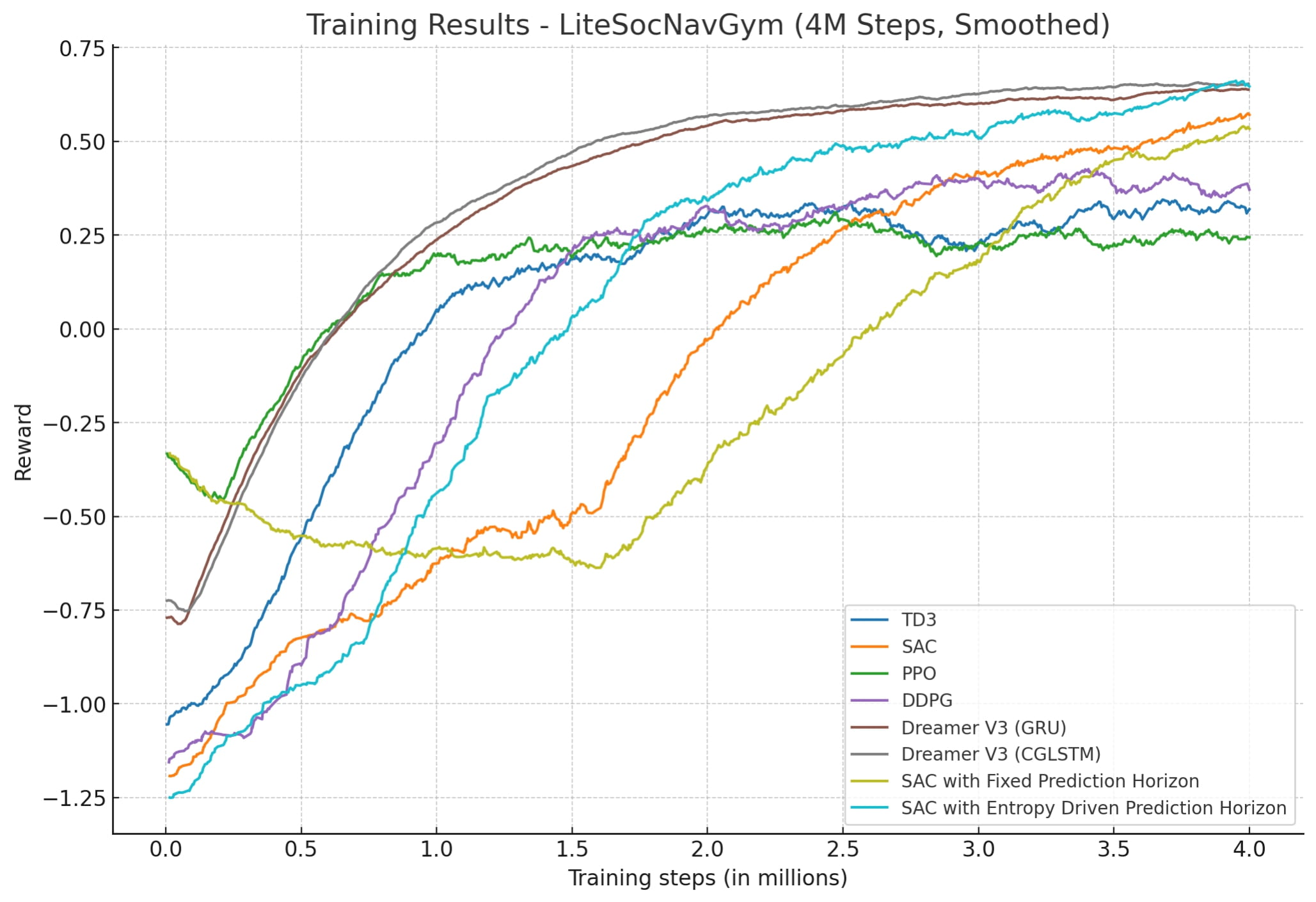
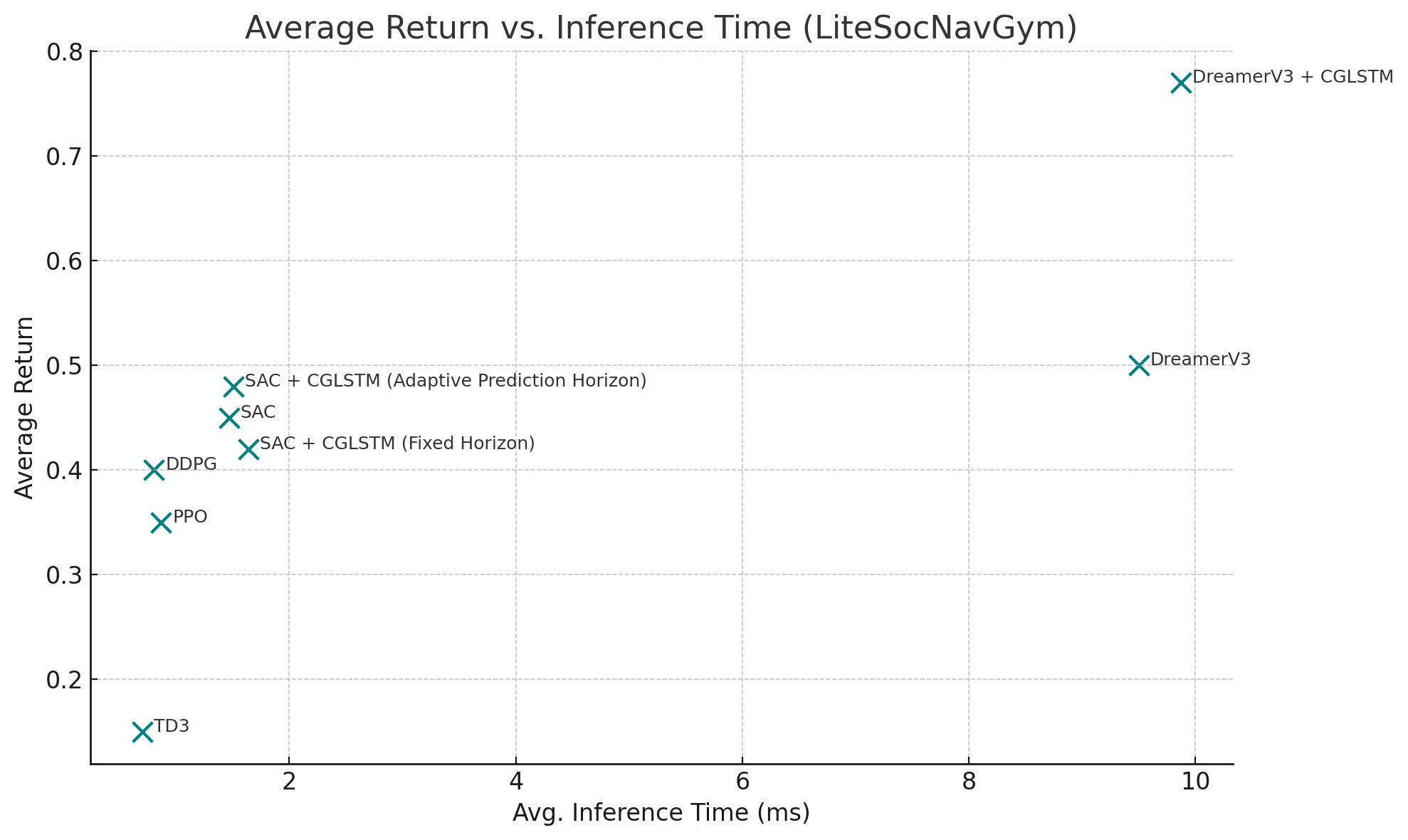
Fixed prediction horizons lead to wasted computation in easy scenes and brittle planning in complex ones. This project uses policy entropy to adapt the depth of world-model rollouts on the fly. Early results show faster convergence in LunarLander-v2 and stronger success/return trade-offs in LiteSocNavGym, while keeping inference latency suitable for robotics.
Time
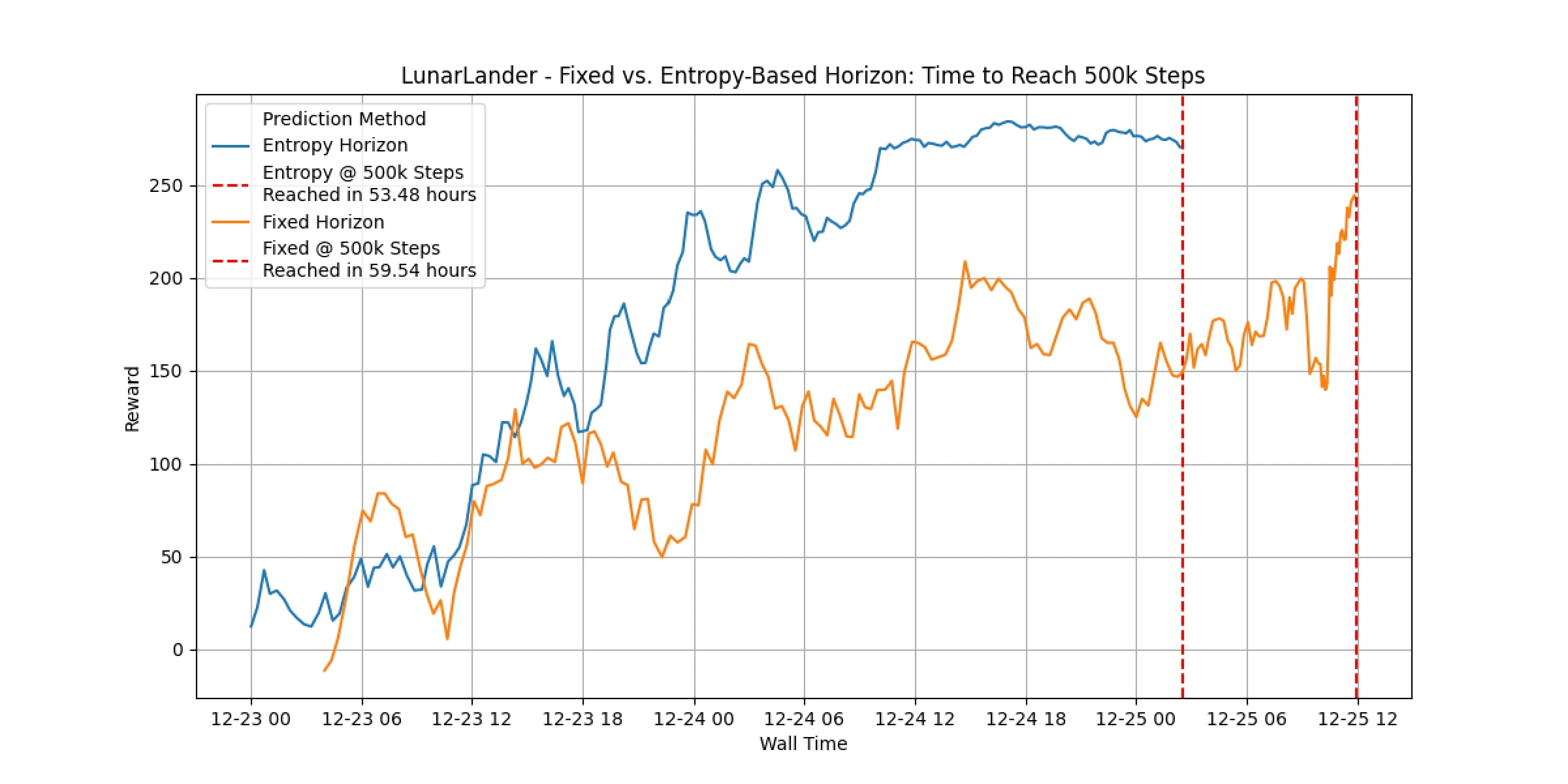
53.48 h to 500k steps
Entropy horizon vs 59.54 h fixed (LunarLander)
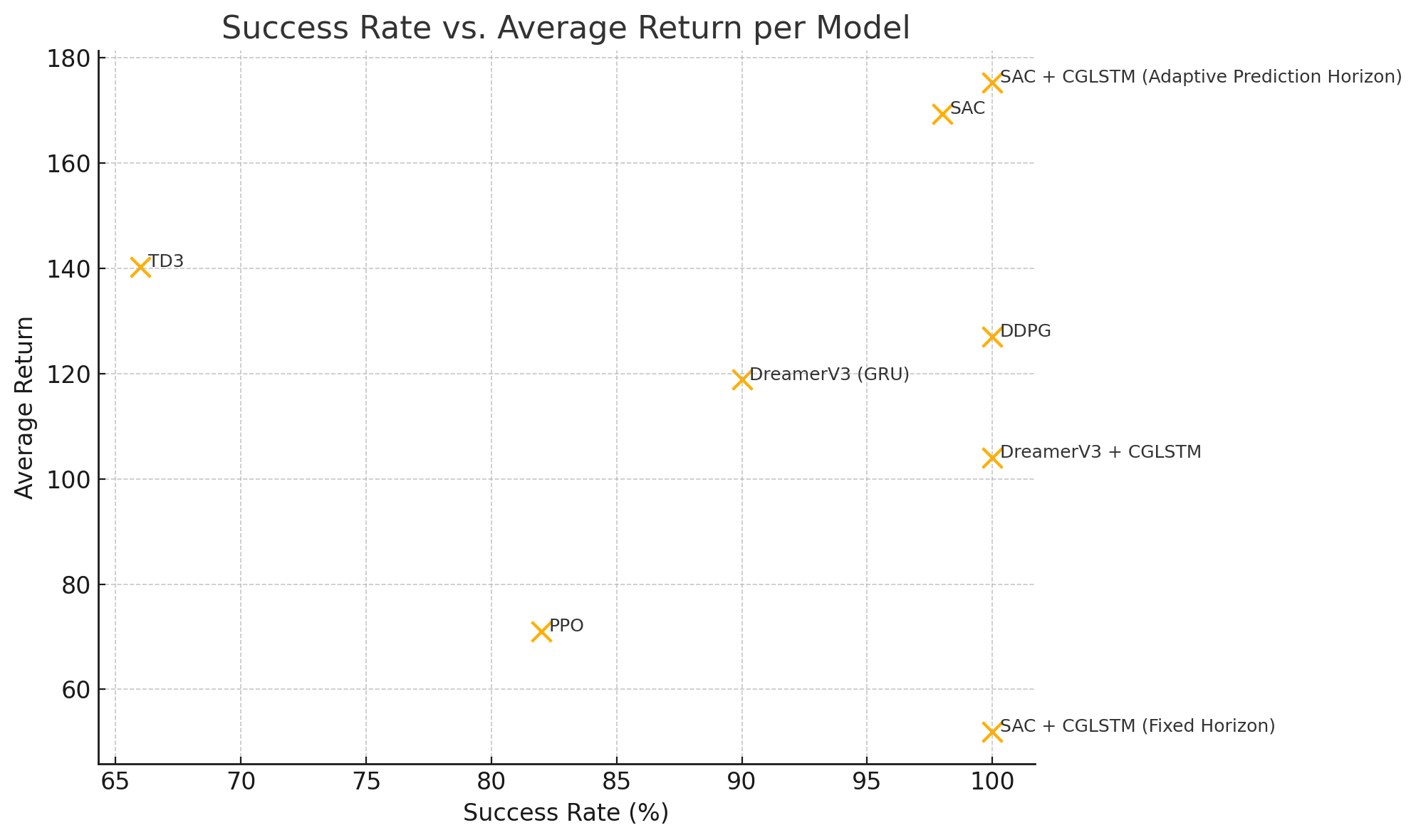
100%
Success rate
SAC + CGLSTM (adaptive) in LiteSocNavGym
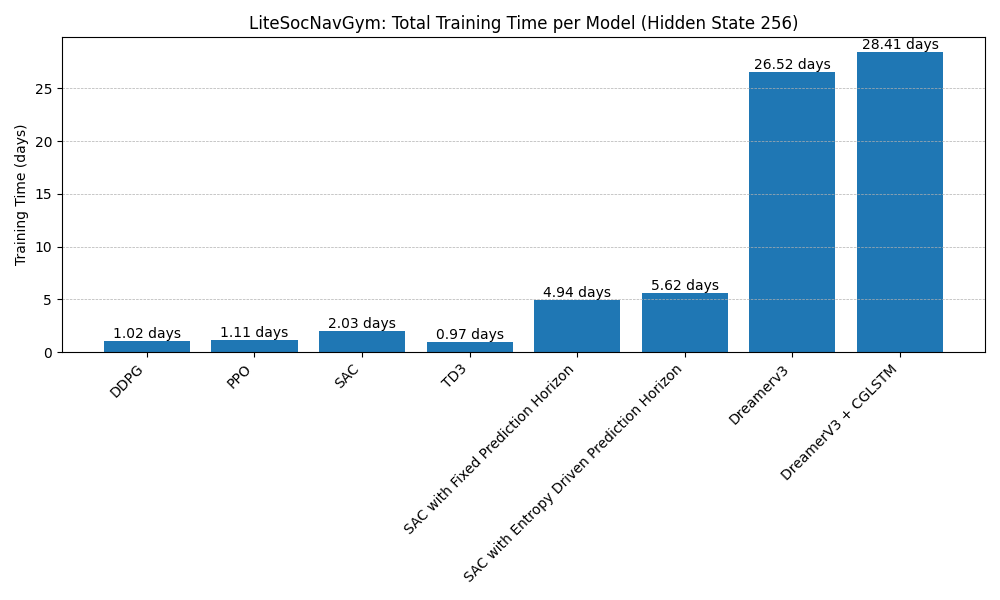
5.62 days
Full training
LiteSocNavGym vs 28.41 days for DreamerV3 + CGLSTM
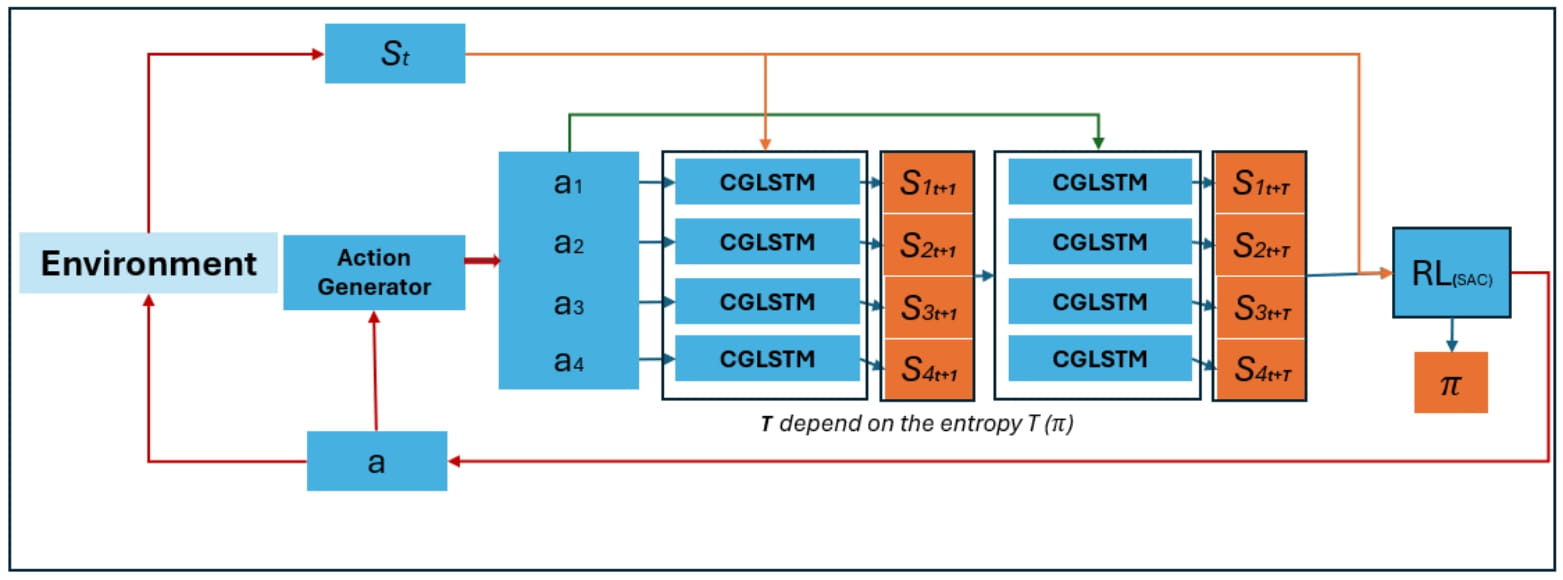
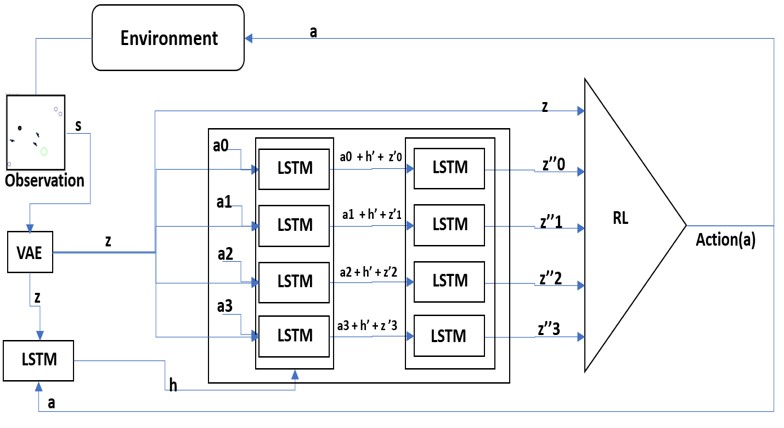
Adaptive horizon pipeline: policy entropy controls how many CGLSTM rollouts are generated before the SAC update.
2. Research Motivation
Fixed horizons in world-model RL either over-plan (wasting compute when the scene is simple) or under-plan (failing when dynamics are chaotic).
Policy entropy provides a continuous indicator of decision uncertainty; high entropy → longer lookahead, low entropy → shorter horizon.
Target applications include social navigation and aerial robotics, where scene complexity changes rapidly and latency budgets are strict.
3. Adaptive Architecture
The adaptive controller sits between the CGLSTM world model and the reinforcement learner. At each step it samples multiple horizon candidates, evaluates expected entropy reduction, and commits to the smallest depth that meets a confidence threshold.
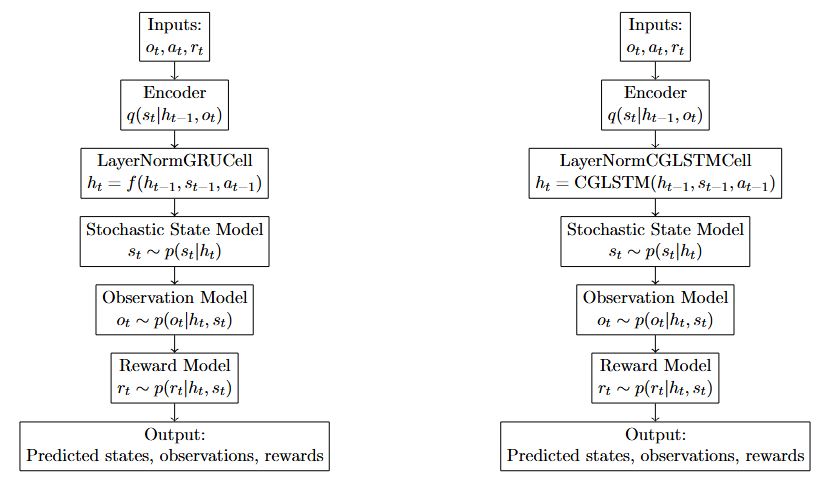
Replacing the LayerNorm GRU in DreamerV3 with CGLSTM gives higher fidelity latent rollouts before the adaptive controller is applied.
Adaptive horizon inside LiteSocNavGym: when policy entropy spikes, additional CGLSTM rollouts are appended before the SAC update.
4. Implementation Notes
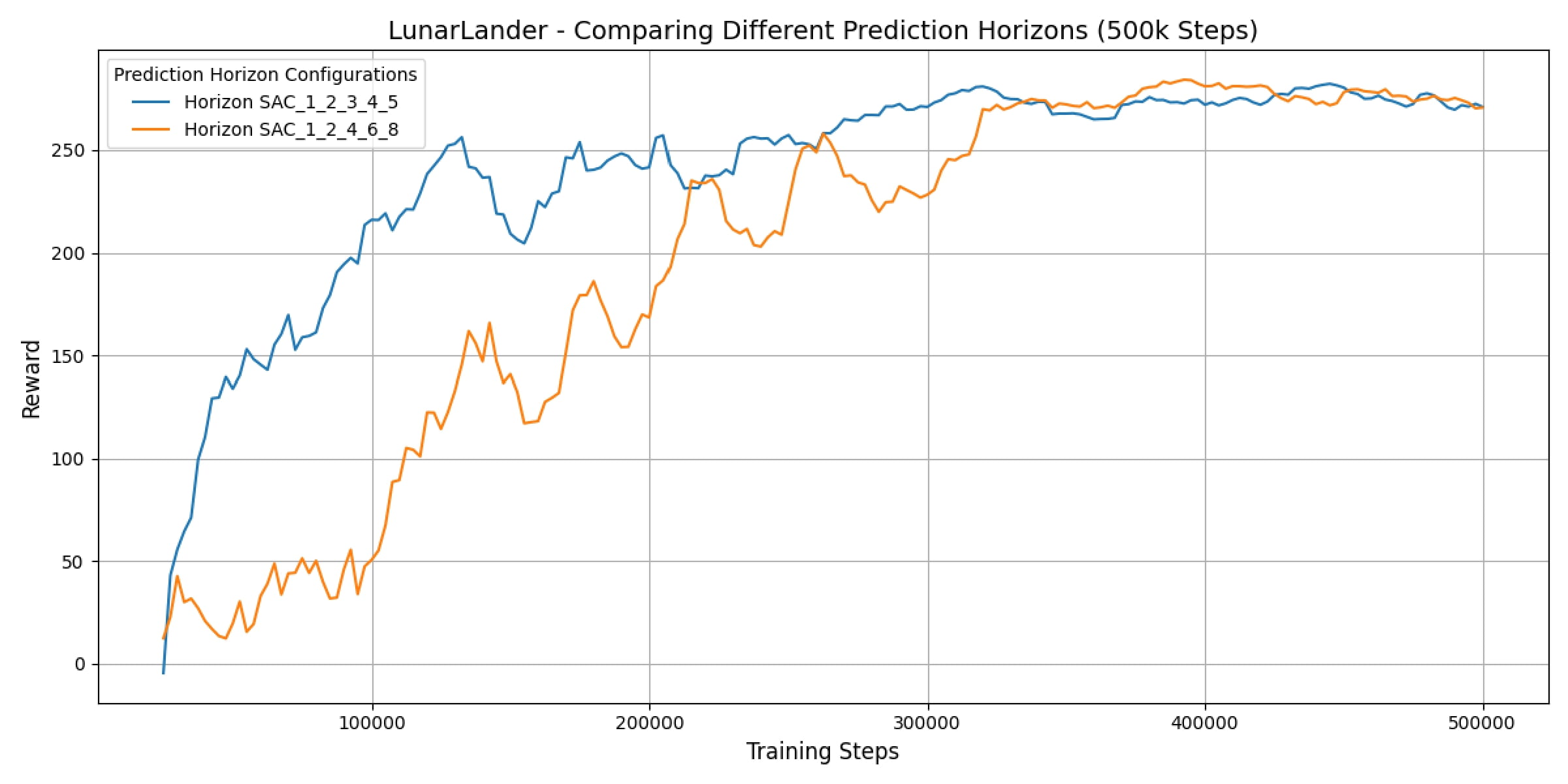
Horizon candidates: {1,2,4,6,8} with entropy thresholds at 0.2, 0.35, 0.5.
Entropy is computed from the SAC policy logits; if entropy > thresholdk, expand horizon to next candidate.
CGLSTM hidden state is reused across horizon branches to avoid recomputing encodings.